Tuesday, 3 November 2015

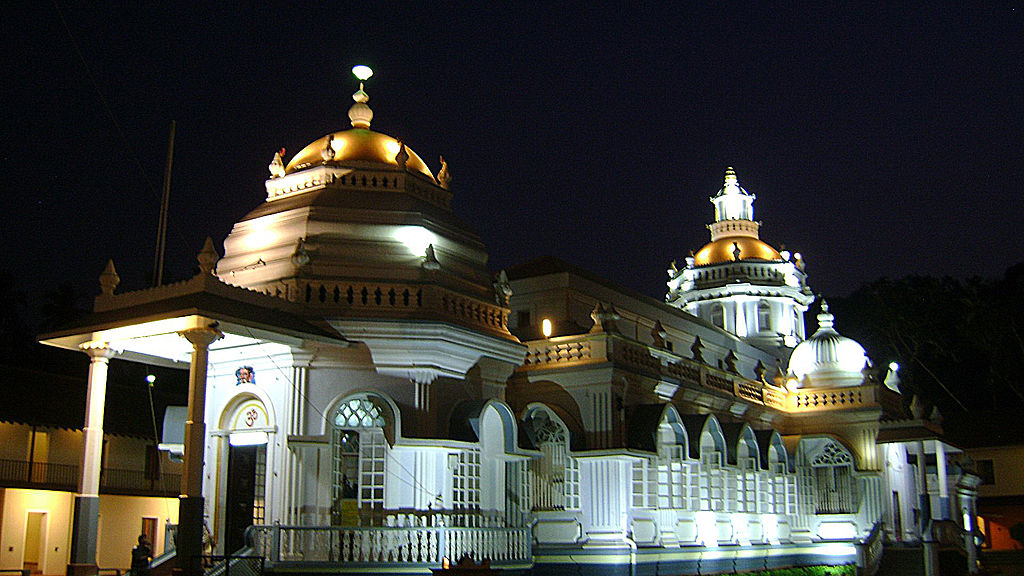
Shantadurga Temple Ponda Goa

Shri Shantadurga Temple is a large temple complex 33 km from Panaji  in Ponda TalukaGoa. Initially, mud shrine was built and the deity was installed here. This mud-shrine was converted into a beautiful temple whose foundation stone was laid in 1730 and the temple was completed in 1738 and renovated in 1966.
The temple is dedicated to Shantadurga, the goddess who mediates between Vishnu and Shiva. Local legends tell of a battle between Shiva and Vishnu The battle was so fierce that the god Brahma prayed to Goddess Parvati to intervene, which she did in the form of Shantadurga. Shantadurga placed Vishnu on her right hand and Shiva on her left hand and settled the fight.
Shantadurga is shown as holding two serpents, one in each hand, representing Vishnu and Shiva. Apart from this battle, local legends often say that Shantadurga had gone to Sankhwal, a village in Salcette Taluka to kill a demon named Kalantak that was harassing the Brahmins. As a reward, she was given the name of Vijaya.
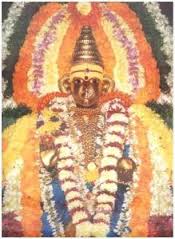


Shri Shantadurga is the Kuldevi (family deity) of many Goud Saraswat Brahmins (Konkan region of Maharashtra and Goa).Temple is Private.

Monday, 2 November 2015

Mangueshi Temple Ponda Goa

Shri Mangeshi temple  is located at Mangeshi Village in Ponda taluk, Goa. It is at a distance of  21 km from Panaji the capital of Goa, and 26 km from MargaoThis temple is one of the largest and most frequently visited temples in Goa.
The temple has been rebuilt and renovated twice during the reign of the Marathas and yet another time in the year 1890. The final renovation occurred in the year 1973 when a golden kalasha was fitted atop the tallest dome of the temple.
The main temple is dedicated to Bhagavan Manguesh, an incarnation of Shiva. Bhagavan Mangesh is worshipped here as Shiva linga. According to the legend, Lord Shiva had manifested into a tiger to scare his wife Parvati. Paravati, who was frightened at the sight of the tiger, went in search of Lord Shiva and cried out, "Trahi Mam girisha!" (Oh Lord of Mountains, save me!). Upon hearing the words, Lord Shiva turned himself back to his normal form. The words "mam girisha" became associated with Lord Shiva and over time the words got abbreviated to Manguirisha or Manguesh.
The complex also has shrines of Goddess Parvati and God Ganesha


Sunday, 1 November 2015

ISKCON Chicago (US)

ISKCON Temple Chicago
 is a hindu temple located at 1716 W Lunt Avenue, Chicago, IL 60626, United States.This temple was initially known as  Sri Radhe Shyamasundar temple.
ISKCON Chicago strives to give you the genuine Hare Krishna experience, based on the principle of selfless loving service.Temple is open from 4 am to 1pm and then 4pm to 8pm.
Krishana fest is hosted every Sunday at 5pm. Krishna fest hosts keynotes including regular theatrical performances, interactive exercises, and occasional workshops demonstrating how spiritual life can be practically applied to enhance one’s quality of life. Chanting of Hare Krishana Hare Rama mantra and dancing is carried out. Lively kirtan (call-and-response chanting) , sumptuous vegetarian feast,thought-provoking keynotes by eminent Bhakti Yogis, Mantra meditation and children’s activities. are also carried out.


Hare Krishana Movement

The Hare Krishna movement 
has its roots 5000 years ago in the teachings of Lord Krishna, the supreme personality of Godhead.  The movement was introduced to the western world by His Divine Grace A.C Bhaktivedanta Swami Prabhupada in 1965 and it rapidly spread all over the world in a matter of 12 years The Hare Krishna movement includes mantra meditation (japa), music (kirtan)food (prasadam)philosophy and festivals.

Basic Philosophy

The Bhagavad Gita focuses on the spiritual nourishment of the soul thereby guaranteeing inner happiness and contentment. The simple process is to connect our daily lives with the supreme spiritual personality, Lord Krishna. So the food we eat, the music we hear, the object of our meditation and the basis of our relationships with one another are all centered around the same focal point.

The basic philosophy begins with the understanding that we are not this body, rather we are the conscious spiritual beings residing in these material bodies resembling humans.
Moreover the spiritual beings residing in all these varieties of life-forms are parts and parcels of the supreme personality of Godhead, Lord Krishna. So on the spiritual platform we are all equal and we experience real happiness when connected to our source.  
source of info:http://www.iskconchicago.com/hare-krishna-movement-history/

Hare Krishna Hare Krishna

Krishna Krishna Hare Hare

Hare Rama Hare Rama

Rama Rama Hare Hares


Friday, 23 October 2015

Iskcon NVCC Pune

ISKCON New Vedic Cultural Center (NVCC) is a temple of Radha-Krishna located in Kondhwa,area  of Pune. Temple was  inaugurated on 23 February 2013 by the President of India Pranab Mukherjee.Vedic Cultural Centre of the International Society for Krishna Consciousness (ISKCON) was inaugurated on February 24, at Pune.
"ISKCON NVCC will  serve as cultural, educational, religious, and spiritual home in Pune and could soon become Pune’s most prominent icon.
The old and small ISKCON temple known as "Sri Sri RadhaKunjbihari Temple" started first in camp area Pune.Since , space available here was short to serve the large crowds on festivals, grand satsanga programs, and for holding cultural and educational outreach programs for newcomers,a bigger temple was proposed that could serve expanding activities of ISKCON Pune.


Monday, 5 October 2015

ISKCON temple Juhu Mumbai

ISKCON temple, Mumbai also known as Sri Sri Radha Rasabihari ji Temple is a temple in Juhu area in Mumbai . Bhaktivedanta Swami Prabhupada, the founder-acharya of ISKCON inspired the construction of one of India’s most beautiful temple of Lord Krishna in Mumbai. The presiding Deities at the temple, Sri Sri Gaura-Nitai, Sri Sri Radha Rasabihari and Sri Sri Sita Rama Laxman Hanuman were personally installed by the founder of ISKCON.


The temple complex opened in 1978 

Thursday, 1 October 2015

SABRIMALA TEMPLE KERALA

Sabarimala Sree Dharma Sastha Temple, dedicated to Lord Ayyappa, is the most famous and prominent among all the Sastha temples in Kerala. The temple is situated on a hilltop (about 3000 feet above sea level) named Sabarimala in Pathanamthitta district, which is unique in many respects. The uniqueness of this temple- It is open to all, irrespective of caste, creed or religion. There is a place near the temple; east to Sannidhanam, dedicated to the Vavar (a sufi and friend of Lord Ayyappa) which is called 'Vavarunada', an epitome of religious harmony. Another interesting fact is that it is not open throughout the year. It is open for worship only during the days of Mandalapooja.
 It is said that the pilgrims have to follow fasting for 41 days to cleanse their minds before going to Sabarimala. The journey to the temple is to be taken through difficult paths in the forest as the vehicles can go only up to Pampa.
Legend
 It is believed that the deity of the temple was consecrated by Lord Parasurama at the foot of Sabari hills. It is believed that the deity of the temple was consecrated by Lord Parasurama at the foot of Sabari hills.Another significant aspect of the pilgrimage is that all the pilgrims whether rich or poor, literate or illiterate are all equal before Lord Ayyapa and all of them address each other as Ayyappa or Swamy.Sabarimala is believed to be the place where Lord Ayyapa meditated soon after killing the powerful demon, Mahishi. Another mythology says that its 'Parasurama Maharshi' who uplifted Kerala from the sea by throwing his axe and installed the idol of Ayyappa at Sabarimala.
To enter the Sabarimala temple, the pilgrim has to pass Pathinettampadi (holy eighteen steps). The holly eighteen steps that lead to the shrine have been figuratively called Ponnu Pathinettampadi, 'Ponnu' being an epithet to denote the holy touch of lord's feet. But now 'Ponnu' has become literally true because the steps have been covered with Panchaloham. Each of these eighteen holy steps represents a desire one must conquer in life, it is believed. Only those who observe 41 day's of austerity as ritual can only carry erumudi and can climb these steps


.